

A solo LMFT emails us with no SEO presence. No blog. No Google Business Profile updates in over a year. Within three months of fixing one page and targeting one keyword nobody else in her state was going after, she had 15 new inquiries through her contact form. Not from ads. Not from social media. From one page, ranking for one term.
That’s the story most marketing advice for therapists skips. Not because it’s dramatic, but because it’s boring. One channel, done right, beats five channels done halfway.
Key takeaways on marketing for therapists:
- Marketing advice for therapists usually lists every channel with equal weight, which leaves you with no way to decide where to start.
- Local SEO and Google Business Profile updates tend to produce the fastest returns for a new or under-visible practice.
- Content marketing compounds over months instead of resetting like paid ads do the moment you stop paying.
- AI search tools like ChatGPT and Google AI Overviews are already sending referral traffic to therapist websites, and most practices have no idea whether they show up in those answers at all.
- Picking one channel and running it for 90 days beats spreading thin effort across five.
Marketing for therapists doesn’t have to mean doing everything
Most guides on marketing for therapists read like a checklist: SEO, social media, email, referrals, paid ads, community events, all listed as though they carry equal weight and equal urgency.
They don’t. A solo therapist with six hours a week to spend on marketing and a group practice with a part-time admin are not working from the same playbook, but most advice treats them identically.
The real question isn’t “what are all the ways to market a therapy practice.“
It’s “which one channel, run consistently, will move the needle fastest given where you are right now.” That’s a different question, and it has a different answer depending on your stage, your time, and your budget.
This isn’t a list of 19 or 50 tactics.
It’s a filter. Five real channels, what each one actually returns, how long it takes, and where to start if you can only pick one this month.
Local SEO and Google Business Profile: the fastest return for most practices
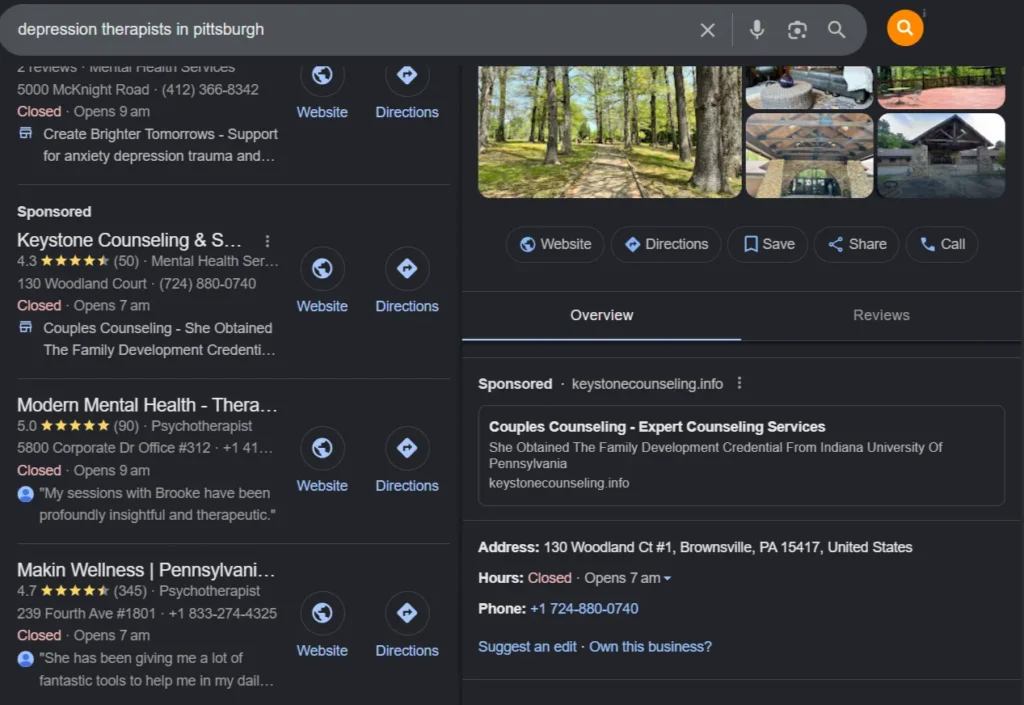
Google Business Profile is the first thing most potential clients check before they ever visit your website. A complete, active profile, one with current hours, real reviews, and a description that names your specialty, shows up in the local map pack for searches like “therapist near me” or “anxiety counseling [city].” That playbook assumes a physical office though, local SEO works differently for a telehealth-only, multi-state practice.
An incomplete or abandoned Google Business profile doesn’t show your practice at all, regardless of how good your website is.
This channel rewards speed. Claiming an unclaimed profile, adding real photos, and requesting reviews from current clients (where appropriate and compliant with your state’s guidelines) can shift visibility within weeks, not months.
Pair it with local SEO on your practice website itself, meaning your city and specialty are named clearly on your homepage and service pages, and you’re competing for searches your website wasn’t showing up for before.
The tradeoff: local SEO has a ceiling. It gets you found by people already searching in your area. It doesn’t build authority outside your city, and it won’t do much for a practice that’s already fully booked and looking to build a name beyond local search.
Content marketing: the slow build that doesn’t reset
A blog post you publish today can still bring in clients two years from now. That’s the entire case for content marketing, and it’s also why it frustrates therapists who try it for six weeks and quit. Content is not a fast channel. It’s a compounding one.
The therapist mentioned earlier didn’t get her 15 inquiries from a blog that had been running for years. She got them from one page built around one specific, low-competition keyword, the kind of search term big directories and generic therapy sites weren’t bothering to target.
That’s the actual mechanic behind content marketing working for a small practice: you don’t need to outrank Psychology Today on “therapist,” you need to own a specific, less-contested phrase your ideal client is actually typing.
Once a piece of content ranks, it keeps ranking without new spend, unlike paid ads, which stop producing the moment the budget runs out.
The cost is time.
Content marketing for therapists takes real months to show results, and it rewards a narrow, specific target over a broad one.
That’s the kind of return SEO for therapists is built around.
Referrals and community: the channel you already trust, rarely run like a system
Ask most therapists how they got their first ten clients, and the answer is usually a referral from another provider, a former supervisor, or a client who told a friend. Referral marketing for therapists already works. Almost nobody treats it as a channel worth systematizing.
A working referral system looks like a short list of providers in adjacent specialties (psychiatrists, couples counselors, pediatricians, and school counselors) that you’ve actually met, a simple way for them to send someone your way, and a habit of following up when they do.
It’s not complicated. It’s also the piece that gets dropped first when a practice gets busy, which is exactly backwards, since referral relationships decay when they’re not maintained.
The limit here is volume. A referral system keeps a full caseload full. It won’t build one from zero.
Paid ads: useful for a specific problem, wasted for most others
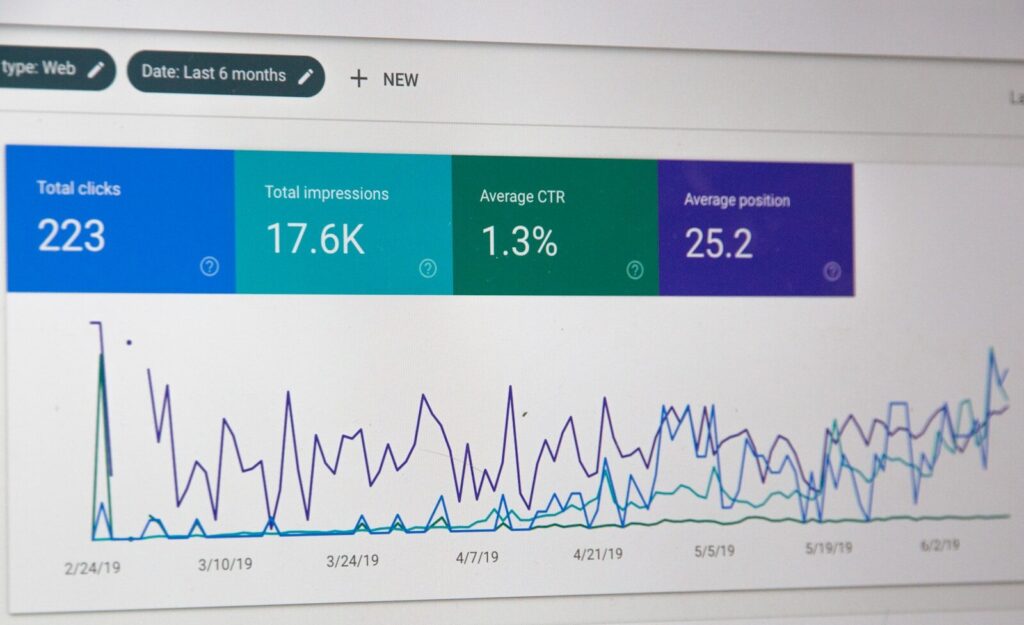
Google Ads for therapists works best for one specific situation: you need clients now, you have a budget to spend, and you’re targeting a search term with clear buying intent, something like “couples therapist accepting new clients [city].” For that use case, paid ads can fill a calendar in weeks.
Outside that use case, paid ads are often the most expensive way to solve a problem SEO or referrals would have solved for free, just slower.
A solo practice with a tight budget and no urgent gap in the calendar is usually better served putting that same money toward the basics of marketing for therapists: Google Business Profile and website first. Paid ads stop producing the day you stop paying.
They don’t compound the way content does.
Social media: not required, but not nothing either.
Do therapists need social media to get clients?
For most practices, social media marketing for therapists rarely converts a stranger into a client directly. What it does well is keep you visible to people who already know you exist, past clients, referral partners, and people in your local community so that when they think of a therapist, you’re the name that comes to mind.
If you enjoy posting and can sustain it, it’s a reasonable secondary channel. If it feels like a chore you’re doing because a checklist said to, it’s probably not where your next hour of marketing time should go. Consistency on one platform beats a half-updated presence on four.
Where AI search fits into the marketing mix now
Google AI Overviews, ChatGPT, and Perplexity are already answering questions like “How do I find a therapist who specializes in anxiety?” or “What should I expect in my first therapy session?” and increasingly citing specific practices and providers in those answers.
This isn’t a future consideration. It’s happening in searches right now, with AI referral traffic to small business sites already climbing, and most therapist websites have never been checked for whether they show up in these answers at all.
The mechanic is similar to traditional SEO, but the target is different. AI tools pull from pages that answer a specific question clearly and completely, in language that stands on its own without needing the rest of the page for context.
A page built to rank in Google search and a page built to get cited by ChatGPT aren’t always the same page, though there’s real overlap.
Why Is My Therapy Website Not Ranking?
A practice that’s already doing solid content marketing has a head start here without extra work since the same structural fixes that stop a therapist website from ranking for nothing are most of what AI search visibility requires too.
Most marketing for therapists advice hasn’t caught up to this yet. Your website should.
What one real practice did with one channel
The solo LMFT from the opening of this post didn’t run a five-channel campaign. She had no blog, no active Google Business Profile, and no paid ad spend. The one thing that changed: a single page built around one keyword with real local search volume and almost no competition, something specific enough that the big directories and generic therapy sites weren’t bothering to target it.
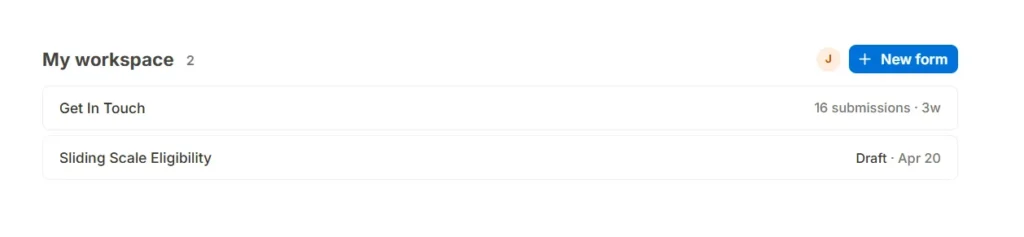
Within 3 weeks after her practice website launch, that one page brought in 16 inquiries through her contact form. No social media. No ad spend. One page, ranking for one term nobody else wanted.
The lesson for marketing for therapists isn’t that content marketing beats every other channel. It’s that one channel, matched to the right opportunity and given enough time to work, will outperform five channels split across too little attention each.
How to pick one channel to start with this month
If you’re not sure where to start with marketing for therapists, the fastest gut check is time versus urgency.
Need clients in the next few weeks and have budget? Paid ads on a high-intent search term.
Have more time than budget and no urgent gap in your calendar? Google Business Profile and local SEO, since both can move relatively fast without ad spend.
Willing to invest in something that keeps paying off two years from now? Content marketing, aimed at one specific, low-competition keyword instead of trying to compete for the broad terms everyone else is already targeting.
Whatever you pick, give it 90 days before deciding whether it’s working. Most marketing for therapists fails not because the channel was wrong, but because it got abandoned in week four for a different channel that also never got a real run.
Not sure which channel fits where your practice stands right now? Get a free therapy website audit and find out what’s actually holding your site back.
What is the most effective marketing strategy for therapists?
There’s no single most effective strategy for every practice. For most solo and small practices, local SEO paired with an optimized Google Business Profile produces the fastest return, since it captures people already searching for a therapist nearby. Content marketing takes longer but compounds over time, and paid ads work best for practices needing clients quickly and willing to pay for that speed.
How much time should a therapist spend on marketing each week?
Three to five hours a week is a reasonable target for a solo practice owner handling marketing alongside client work. That’s enough time to maintain one channel consistently, which produces better results than spreading the same hours across four or five channels at once.
Do therapists need social media to get clients?
No. Social media rarely converts strangers into clients directly. It works better as a visibility tool for people who already know you, past clients, referral partners, and local community connections, rather than as a primary client-acquisition channel.
Is SEO or paid ads better for a therapy practice?
It depends on the timeline and budget. Paid ads produce faster results but stop the moment spending stops. SEO takes longer to show results but keeps working without ongoing spend once a page ranks. A practice with an urgent need to fill open slots is usually better served by ads short-term; a practice building for the next few years is usually better served by SEO.
How long does therapist marketing take to work?
Local SEO and Google Business Profile changes can show movement within weeks. Content marketing typically takes a few months to start ranking and longer to compound meaningfully. Paid ads can produce results within days but only for as long as the budget runs.u003cbru003eu003cbru003eYou don’t need five channels. You need one that fits where you are, run long enough to actually know if it worked.u003cbru003eu003cbru003eIf your Google Business Profile hasn’t been touched in a year, u003ca href=u005cu0022https://claritydesignco.com/google-business-profile-checklist-therapists/u005cu0022 target=u005cu0022_blanku005cu0022 rel=u005cu0022noreferrer noopeneru005cu0022 data-type=u005cu0022pageu005cu0022 data-id=u005cu00221280u005cu0022u003eu003cspan style=u005cu0022text-decoration: underline;u005cu0022u003eget a free Google Business Profile checku003c/spanu003eu003c/au003e before you spend another hour on anything else.